We do not compromise safety or quality for our roofing service. Any roofing material, anytime, we’ve got your back.
Real results for local homes. From restoring Grade II listed villas in the town centre to modernizing family homes in Whitnash, explore our portfolio of work.
They say a picture is worth a thousand words, but in the roofing trade, a finished photo only tells half the story. It doesn’t show the rot we discovered and treated in the rafters, the complex lead welding we performed in the valley gutter, or the care we took to protect the customer’s driveway from the skip.
At Trident Roofing and Building Ltd, we take immense pride in our craftsmanship. Royal Leamington Spa is a town of distinct architectural character, and every roof we touch is treated with the respect it deserves. Whether we are navigating the strict conservation rules of the “Old Town” or upgrading thermal efficiency for a modern build in Cubbington, our goal is always the same: a watertight, durable, and beautiful finish.
Below, we have curated a selection of our recent work. We have broken these down into categories so you can see how we handle the diverse range of roofing projects we undertake across the district.
The iconic white stucco buildings of Leamington’s town centre are beautiful, but their roofs are often complex engineering puzzles. Many feature “M-shaped” or “butterfly” roofs hidden behind parapet walls. These are some of the most challenging projects we encounter, requiring a blend of traditional lead skills and modern waterproofing knowledge.
In these Regency properties, rainwater doesn’t just run off the side; it runs inward to a central valley gutter. If this fails, water pours directly into the core of the house. We often find these valleys lined with 100-year-old lead that has split due to thermal expansion, or blocked by decades of debris.
The Issue: The homeowner reported damp patches on the landing ceiling. A drone inspection revealed the central lead valley was severely cracked and the surrounding Welsh slates were slipping due to rusted nails. Because the property was in a Conservation Area, we couldn’t simply patch it with modern materials.
The Solution:
Permissions: We worked within the local Article 4 directions, sourcing reclaimed Welsh Penrhyn slate to match the existing roof aesthetic perfectly.
Leadwork: We stripped the old valley and installed new Code 5 lead (thicker and more durable), incorporating expansion joints to prevent future cracking.
Insulation: While the roof was stripped, we upgraded the loft insulation to modern standards without raising the roof height—a tricky but essential task for listed buildings.
The Outcome: The leak was eliminated, the heritage appearance was preserved, and the home is now significantly warmer.
Move away from the Parade towards the station or Rugby Road, and you find the classic red-brick Victorian terraces. These homes have stood strong for over a century, but their original roofs are reaching the end of their lifespan.
The slate on these roofs is often still in good condition, but the iron nails used in the late 1800s are not. They rust and snap, causing slates to slide out of position. Fixing one often disturbs two more, leading to a frustrating cycle of repairs. We treat many residential projects in this area where a full strip-and-recover is the most economical long-term choice.
The Issue: A property owner was tired of paying for minor repairs after every storm. The roof lacked any underlay (common in that era), meaning the loft was drafty and incredibly dusty.
The Solution:
Strip Down: We carefully removed all existing slates. We managed to salvage about 60% of them for re-use on the rear elevation to reduce waste and cost.
Breathable Tech: We installed a modern, vapour-permeable membrane. This allows the house to “breathe” while acting as a secondary barrier against wind-blown rain.
New Timber: We replaced the old, rotting laths with pressure-treated graded roofing battens.
Chimney Care: While the scaffolding was up, we repointed the crumbling chimney stack using Lime Mortar (essential for soft Victorian brick) rather than cement.
The Outcome: A secure, insulated roof that retains its period charm but performs like a new build.
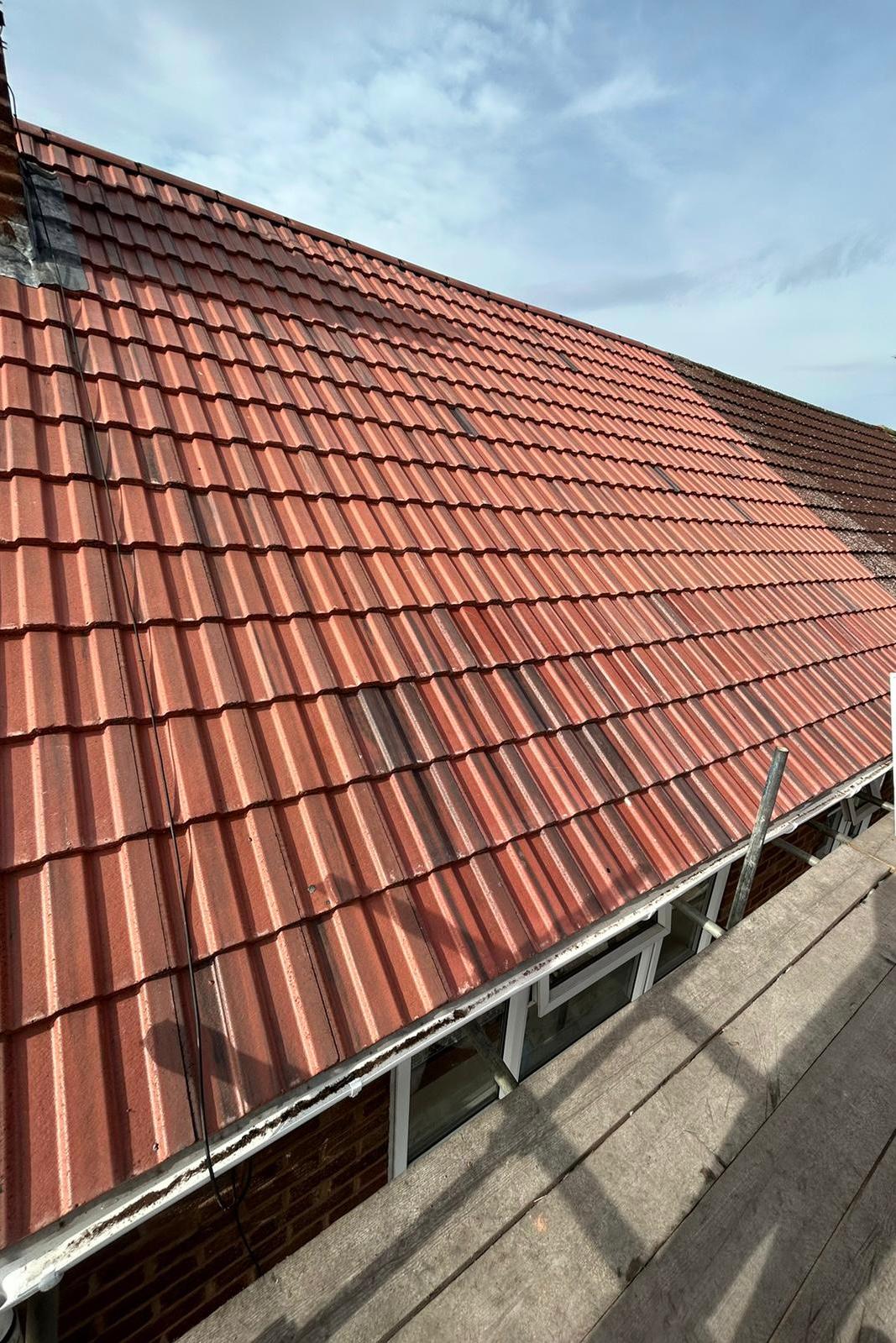
The post-war expansion of Leamington saw thousands of semi-detached and detached homes built. These typically use concrete interlocking tiles and felt underlay. While these homes are newer, we are seeing a surge in these types of projects as materials from the 1970s begin to fail.
Many homes built in the 1960s and 70s used bitumen felt which becomes brittle over time. It often rots away at the eaves (where it meets the gutter), causing water to run down the wall cavity. Furthermore, old mortar bedding on the ridges and verges is prone to cracking.
The Issue: The homeowner had moss falling constantly from the roof and damp spots in the corners of the bedroom ceilings. The exterior also looked tired and dated.
The Solution:
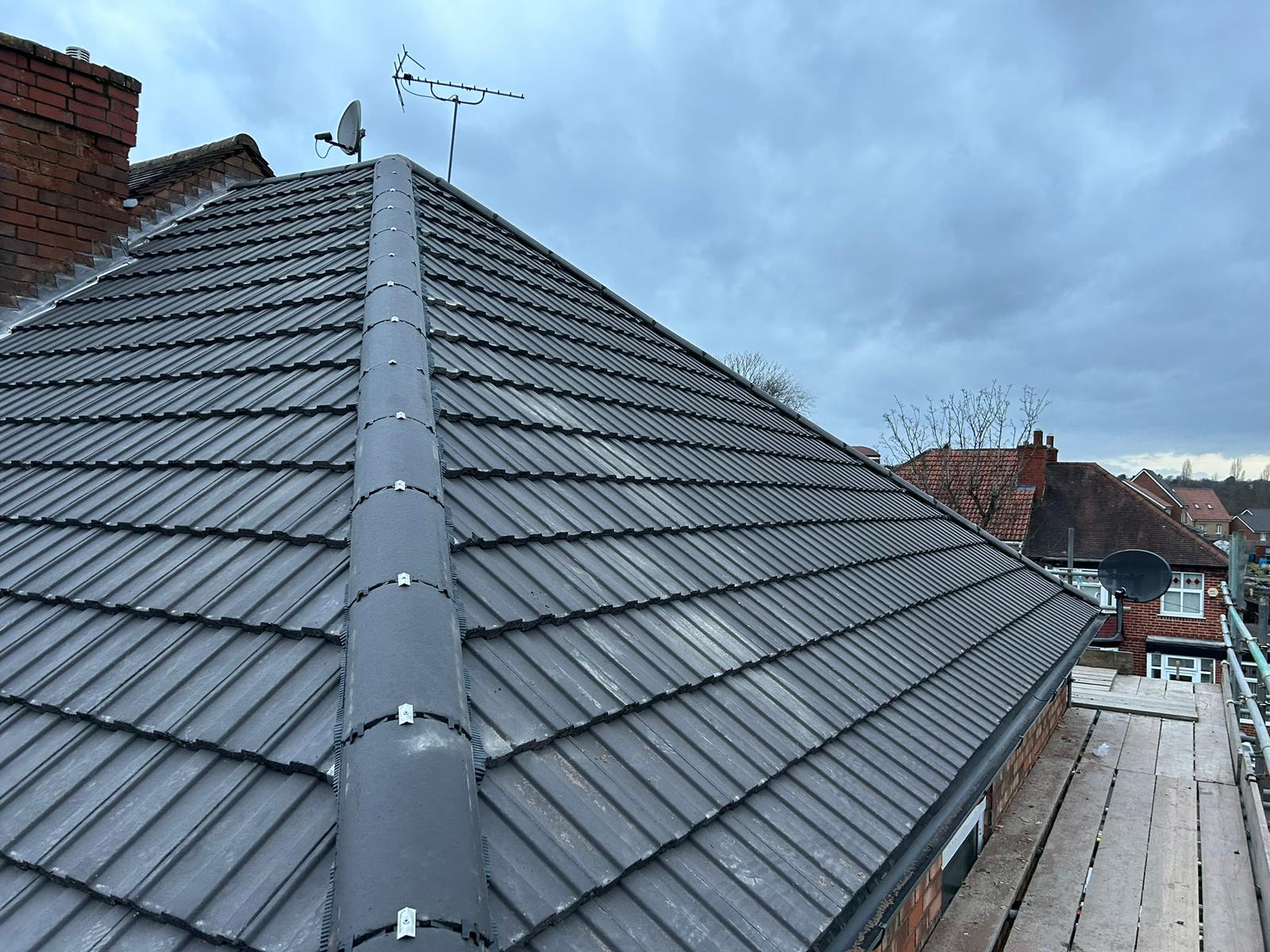
Tile Replacement: We replaced the moss-covered, porous concrete tiles with new “Redland” profile tiles in an Anthracite Grey finish to modernize the look of the home.
Eaves Protection: We installed rigid plastic eaves support trays to bridge the gap where the old felt had rotted, ensuring water flows correctly into the gutter.
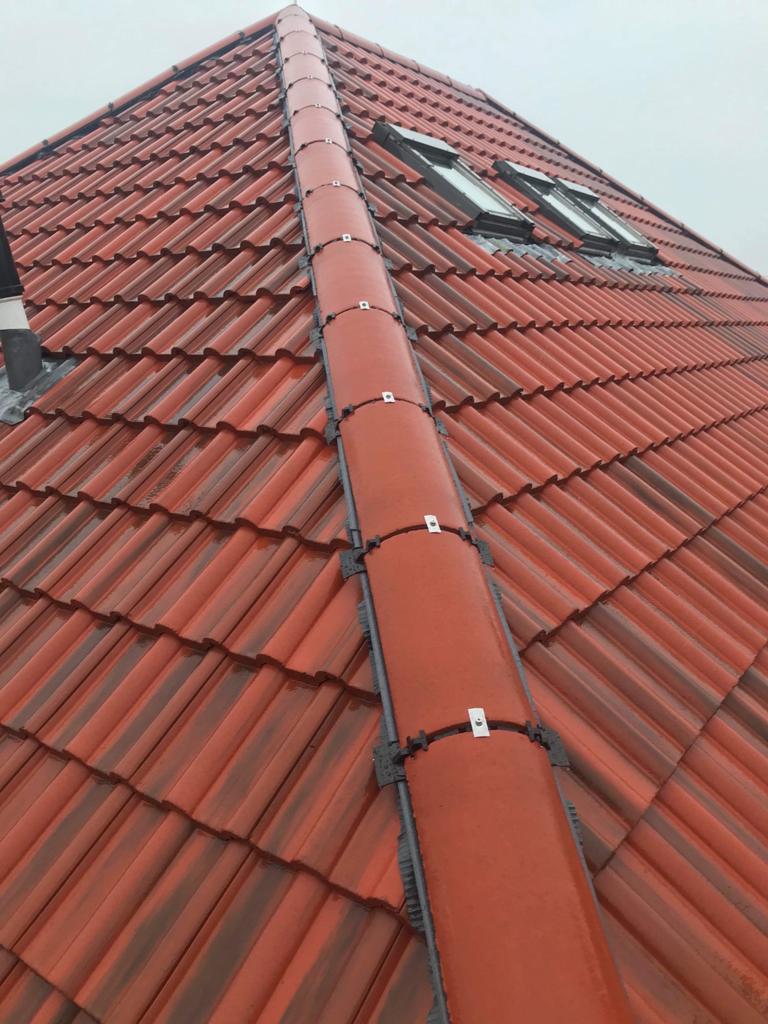
Dry Systems: Instead of using mortar for the ridge (top) and verge (edge)—which eventually cracks—we installed a Dry Ridge and Dry Verge system. These mechanical fixings are screw-clamped to the roof, making them storm-proof and maintenance-free.
The Outcome: A maintenance-free roof that dramatically improved the “kerb appeal” and value of the property, with a 20-year manufacturer guarantee on materials.
Flat roofs—common on garages and kitchen extensions throughout Leamington—have a bad reputation due to the old “pour and roll” felt systems that bubble and crack in the sun. We are changing that perception through our flat roofing projects.
The Issue: The client was converting their garage into a home office, but the existing felt roof was leaking badly and offered zero thermal retention.
The Solution:
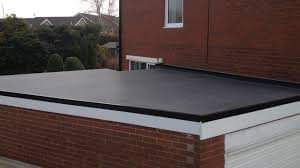
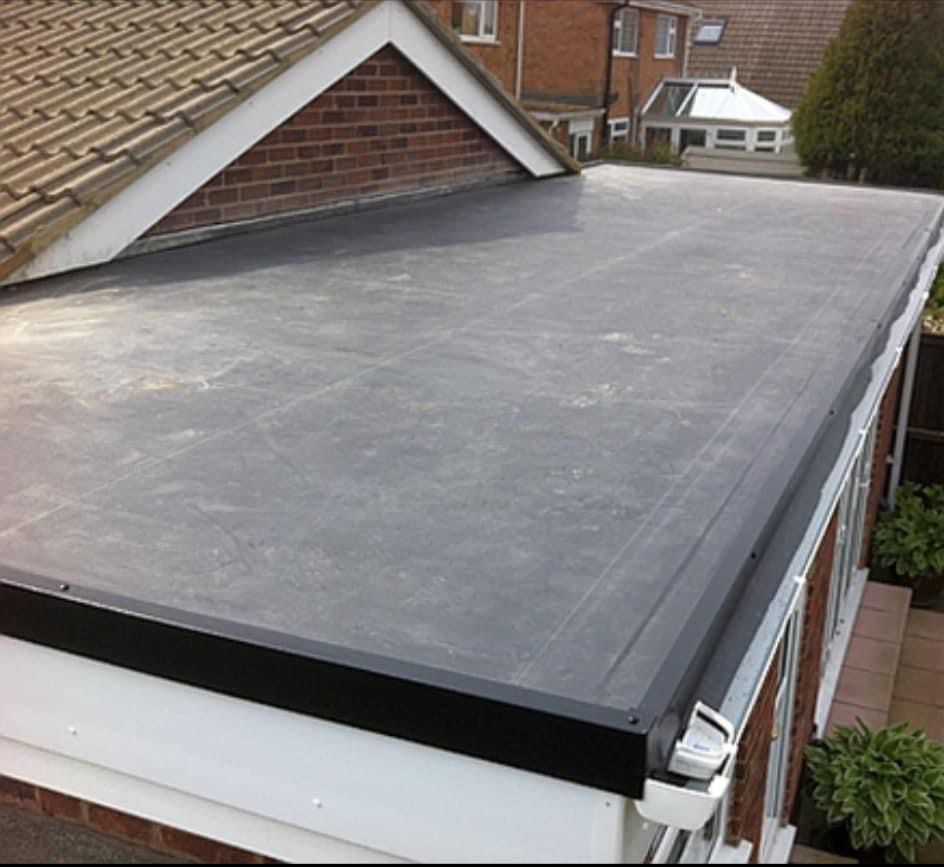
EPDM Rubber: We stripped the old felt and installed a one-piece EPDM rubber membrane. Because it is a single sheet, there are no joints to leak. It is the same material used to line reservoirs—incredibly tough.
Warm Deck Design: We installed 100mm rigid insulation boards on top of the roof deck before laying the rubber. This “Warm Roof” design keeps the heat in the new office and prevents condensation forming on the ceiling.
Finishing Touches: Finished with neat black UPVC edge trims for a sharp, modern look.
The Outcome: A dry, warm workspace with a roof life expectancy of 50+ years.
Beyond residential homes, we also support local businesses. Managing commercial projects requires a different approach, prioritizing speed and safety to minimize disruption to your daily operations.
The Issue: A local shop on a busy street had a leaking roof that was damaging stock. Access was difficult due to the pedestrian zone.
The Solution:
Logistics: We arranged for early morning access and specialized scaffolding that kept the pavement clear for shoppers.
Repair: We identified a blocked parapet outlet that was causing water to back up. We cleared the blockage, installed a larger leaf guard, and re-lined the gutter with a liquid waterproofing system.
The Outcome: The business remained open throughout the repair, and the stock room is now dry.
We treat every job, big or small, with the same rigorous process. Here is what you can expect when we start one of our projects on your home:
| Stage | Our Commitment |
| 1. Site Safety | We erect scaffolding to HSE standards. We never cut corners on safety for our team or your family. |
| 2. Protection | We sheet up your driveway and move garden furniture to prevent damage from falling debris. |
| 3. Materials | We use only graded battens, breathable membranes, and British Standard tiles/slates. |
| 4. Communication | You get daily updates. If we find hidden rot, we stop, show you, and agree on a plan before proceeding. |
| 5. Cleanup | We magnet-sweep your drive for nails. We leave your property as tidy as we found it. |
Choosing a roofer is a significant investment. Viewing previous projects gives you the confidence that we aren’t just good at sales—we are good at roofing. It allows you to see the quality of our lead dressing, the straight lines of our tiling, and the neatness of our pointing.
We encourage all potential clients to ask for references. Because we have worked in almost every neighborhood—from Sydenham to New Milverton—there is likely a Trident roof near you that you can view from the street.
Q: How long does a typical re-roof take? A: For a standard semi-detached house, it usually takes 5 to 7 days, weather permitting. We always ensure the roof is watertight at the end of each day, so you are never left exposed overnight.
Q: Do you handle the planning permission for heritage roofs? A: We can guide you. While the homeowner is ultimately responsible for permission, we are well-versed in local conservation rules. We can provide samples of slates or tiles for you to present to conservation officers for approval.
Q: What happens if you find more damage once the work starts? A: This is common with older homes (e.g., rotten rafters). We will stop work, photograph the issue, and explain the options. We will never hide it or just cover it up.
Q: Are your projects insured? A: Yes, we carry full public liability insurance, and our new installations come with workmanship guarantees.
Whether you need to preserve a piece of Leamington’s history or secure your family home for the future, we have the experience to deliver. We would love to add your home to our list of successful projects.
Call Trident Roofing and Building LTD today on +44 7733 716285 to discuss your roof.
Let us help you! We are experts at roofing services, and we offer a full range of repair and upkeep services.
WhatsApp us